Claude and the ART enzyme finding: a research lead, with important unanswered questions
Anthropic's ART announcement explained: what Claude agents identified, how researchers followed it up, and why the biological function remains an open question.
In this article
Anthropic announced on September 23 that a Claude-led research effort had identified an unusual enzyme system, named array-associated reverse transcriptases (ART). Human researchers then investigated the findings in the laboratory. The system’s biological function remains unresolved.
The news value is the path from searching existing data to a finding worth experimental follow-up. It is too early to treat ART as a working gene-editing tool, a treatment or a replacement for laboratory research.
What did the agents find?
The technical report describes reverse transcriptases in jumbo-phages alongside repeated DNA units and a partner gene. Reverse transcriptases are enzymes that copy RNA into DNA. The unusual arrangement attracted further investigation; the paper reports that the repeat arrays are expressed during infection.
An agent workflow, followed by scientific review
The report names Claude Mythos 5 and describes worker–supervisor pairs using a shared record. Across 21.5 hours, the campaign ran 949 agent sessions. Candidate filtering mattered: only three of 17 proposed partner families were confirmed as previously unreported associations; the others were rejected or set aside.
Those rejected candidates are part of the story. An exploratory system should generate leads, but a lead is not a result simply because an agent has written a persuasive report about it. Preserving the evidence and the reasons for rejection is essential to assessing whether the process helps researchers.
Inside the laboratory
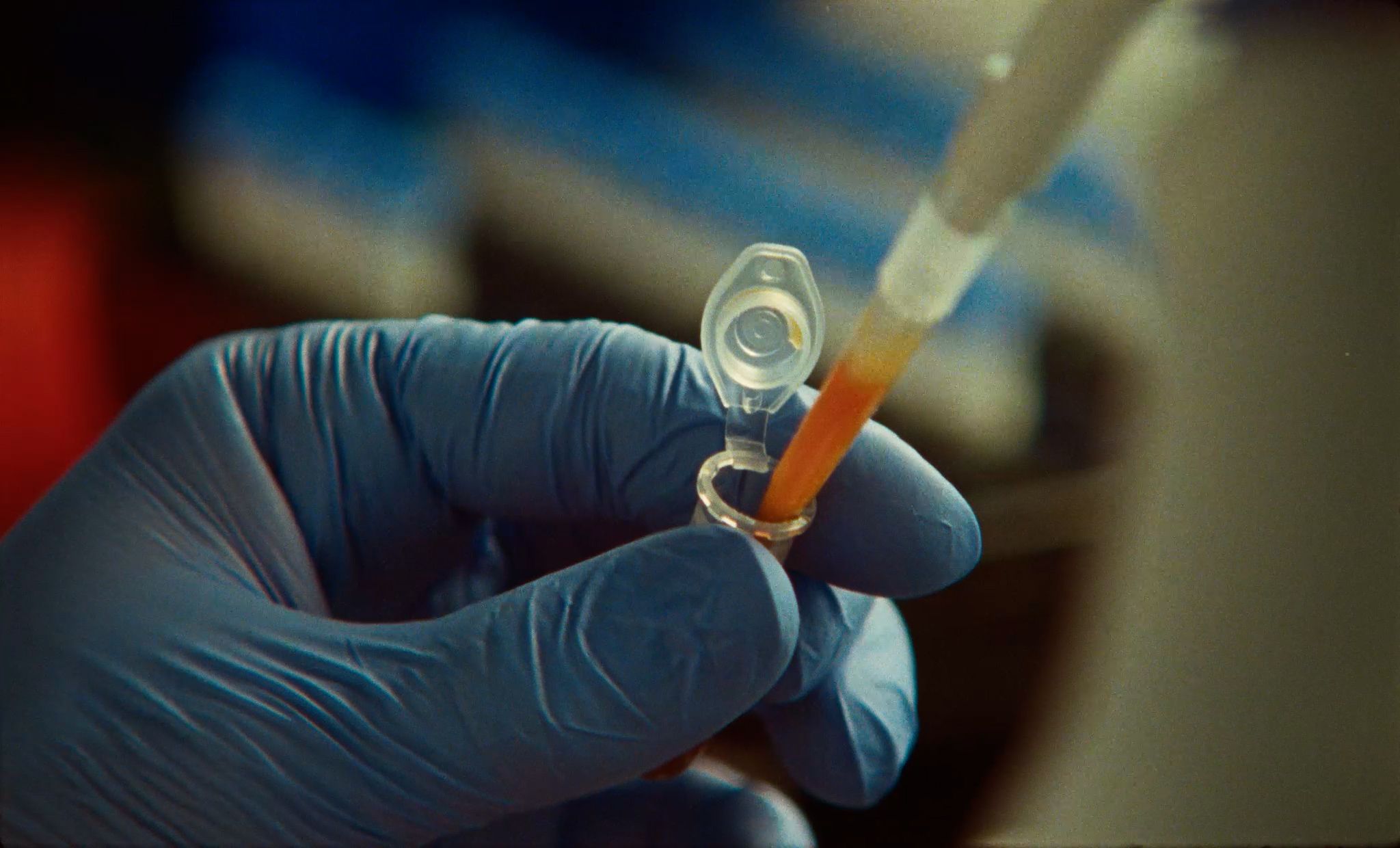
Anthropic’s official lab video adds a view of the research setting to the announcement and animation. The player connects to YouTube only when you choose to load it.
What is established, and what is still open?
| Reading of the announcement | Our assessment |
|---|---|
| An AI-assisted search produced a finding that received experimental follow-up | A meaningful research contribution to examine |
| Every promising candidate became a discovery | The reported filtering shows why this would be misleading |
| ART is ready for a practical biotechnology application | That requires evidence beyond the current report |
| The technical paper is independent confirmation of the company announcement | Both are Anthropic sources; they should be read together, not counted as two independent replications |
For readers following agent development, the interesting design choice is a traceable research process: a proposal, a review and a record that can be challenged. A comparable principle applies outside biology. A research assistant should preserve the source supporting its claim and make it possible to follow why an alternative was discarded.
The next questions we would watch are independent replication, a clearer account of ART’s function and evidence that this workflow improves discovery across more than one campaign. This article reports the announcement and technical paper; we have not independently validated the biological findings.
Sources
- Claude discovers a novel enzyme system — 23 September 2026 ↗Anthropic
- Autonomous AI agents discover reverse transcriptases with tandem repeat arrays — technical report ↗Peter H. Yoon and co-authors / Anthropic
Created with AI assistance.
Suggest a correction
Found an error or a missing source? Send a private suggestion to the editor. It will be reviewed and will not appear as a public comment. No name, email or account is needed.


Send us a message