NVIDIA Vera on CoreWeave: a CPU built for AI agents
CoreWeave will offer NVIDIA's Vera CPU for agent sandboxes and brings Vera Rubin NVL72 to its cloud. The vendors' numbers, baselines and gaps.
In this article
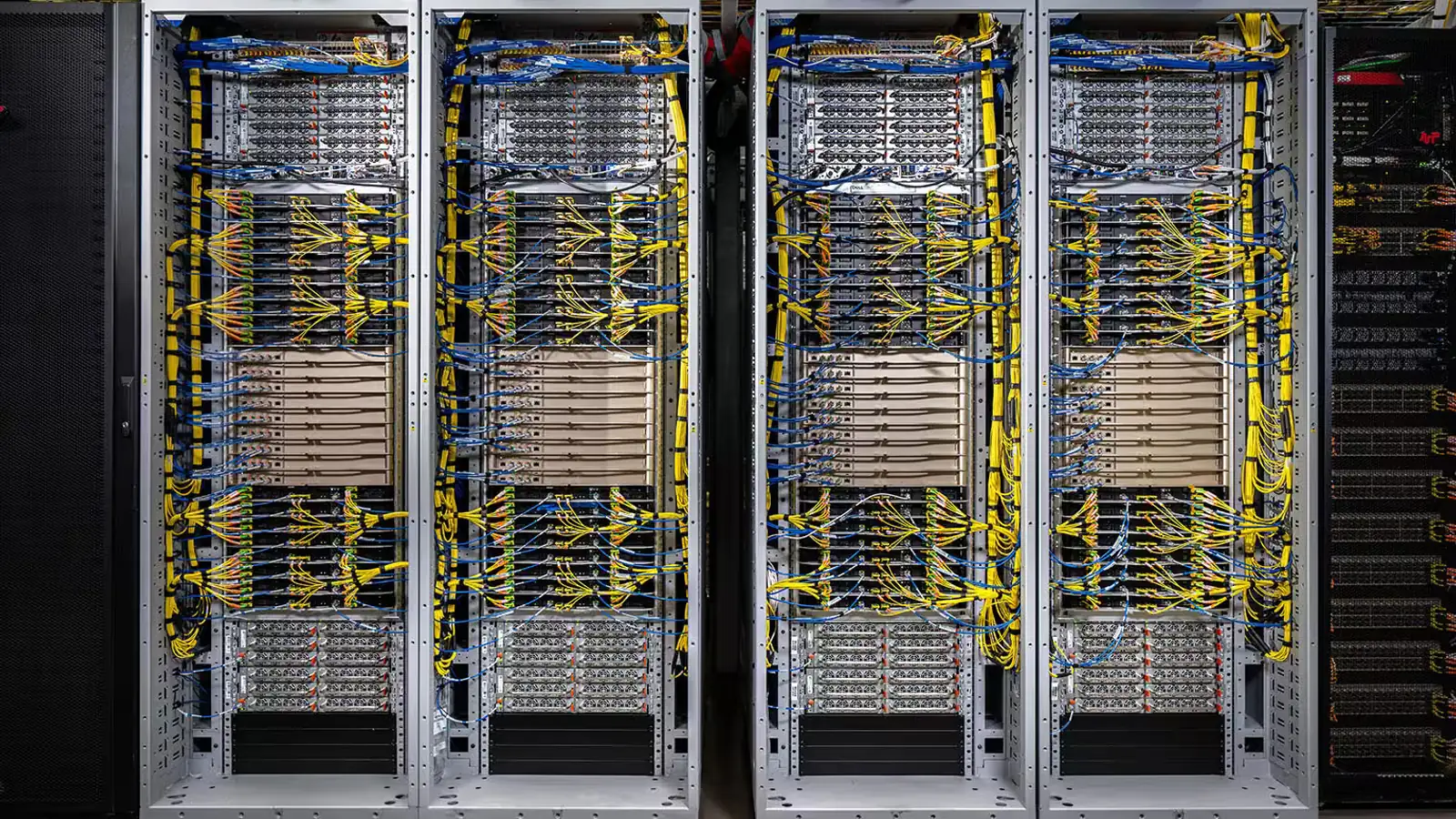
AI infrastructure news usually means GPUs. The September 30 announcement from NVIDIA and CoreWeave makes a different argument: for AI agents, a growing share of the work happens on CPUs, and the sandboxes agents run in are the bottleneck to plan for. This article covers what the two companies announced and what their numbers do and do not show. Every figure below comes from NVIDIA, CoreWeave or its customer Cognition; none has been independently verified.
What was announced
At CoreWeave’s Fully Connected conference in San Francisco, three things came together:
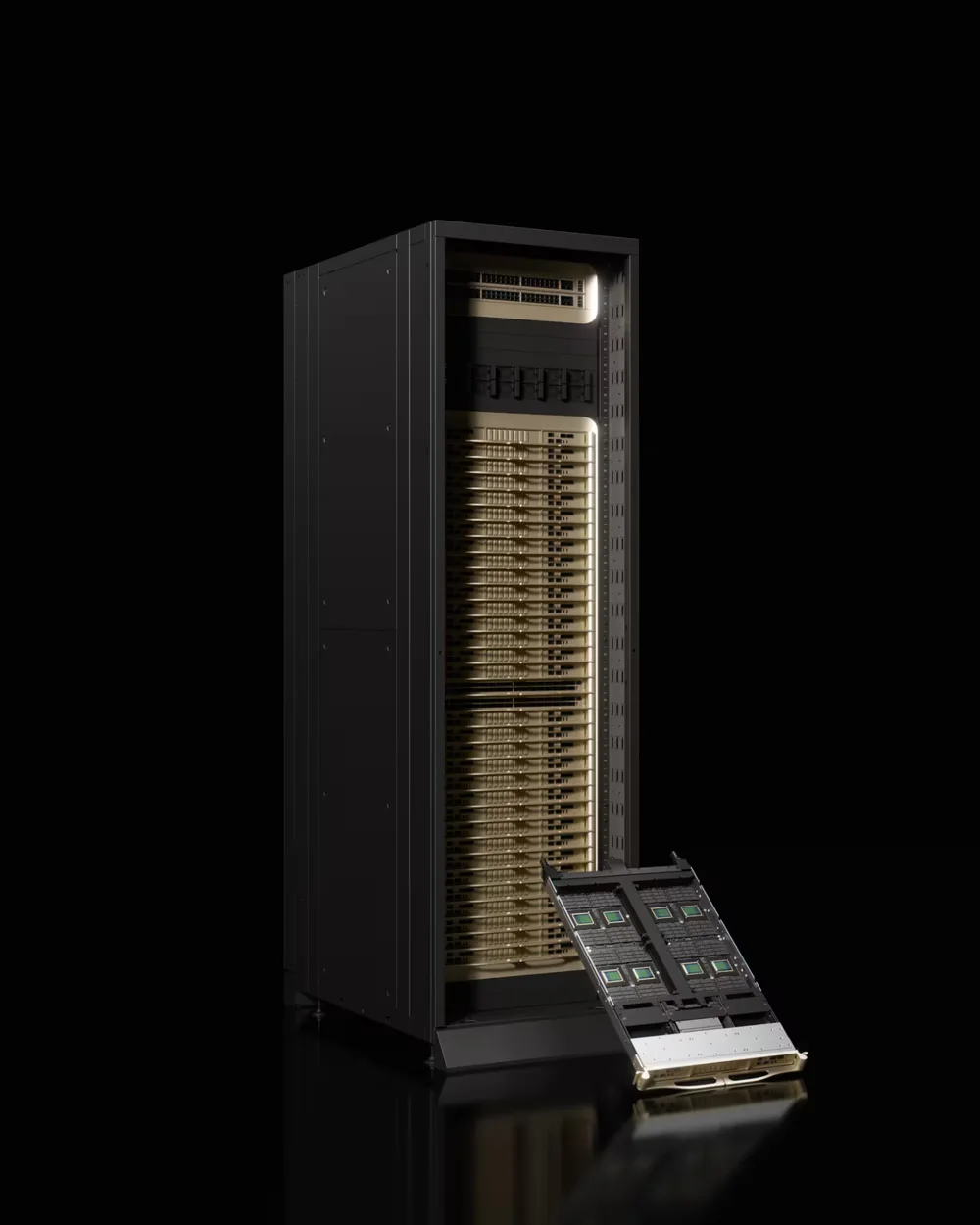
- Vera Rubin NVL72 on CoreWeave Cloud. CoreWeave says the platform is in limited availability, with hundreds of Rubin GPUs deployed across multiple regions. Cognition, the lab behind the Devin software engineer, is the first customer in production. CoreWeave received its first production racks earlier in September. A Vera Rubin NVL72 rack combines 72 Rubin GPUs and 36 Vera CPUs.
- NVIDIA Vera CPU, still to come. CoreWeave “will offer” Vera, a CPU NVIDIA describes as built for agentic workloads. This is an announcement of a coming offering, not a general launch.
- CoreWeave Sandboxes, now generally available, and a new environment called Forge for training, evaluating and improving models and agents. Sandboxes run agents, tool calls, reinforcement-learning runs and evaluations in isolated CPU or GPU environments, with a fresh environment for each tool call or run.
Why CPUs
CoreWeave’s argument is that GPUs do the model’s reasoning, while CPUs “execute the work surrounding every step: isolated sandboxes, reinforcement learning environments, tool calls, code execution, and data pipelines.” That demand is bursty. The company says one step in the loop can need thousands of environments for an hour and almost nothing until the next run, which is why it presents sandbox density and startup time as the measures that matter. A Signal65 analyst quoted in the release says a growing share of each agent cycle is CPU work.
We covered the same shift from the capacity side in Anthropic’s Akamai deal and from the tooling side in Docker Cloud Sandboxes. The Vera announcement adds a chip designed around it, though only as a vendor claim for now.
The numbers and their baselines
| Claim | Who reports it | What to know |
|---|---|---|
| 128 CPUs, 11,264 cores per rack; more than 11,000 concurrent environments | CoreWeave, NVIDIA | The 11,000 figure assumes one core per environment |
| Sandbox startup more than 3x faster | CoreWeave | Compared with “an x86 CPU”; no chip or workload named |
| 1.7x on Terminal-Bench across passing tasks | NVIDIA | Measured by CoreWeave on Vera CPU; the baseline is not stated |
| Up to 4.8x total token throughput for SWE-2 inference | Cognition, published by NVIDIA and CoreWeave | Per GPU, against GB200 NVL72, at matched interactivity; a sample of FrontierCode tasks; “early tests” |
| 3.8x output token throughput for reinforcement learning | Cognition, published by CoreWeave | Same comparison; one workload |
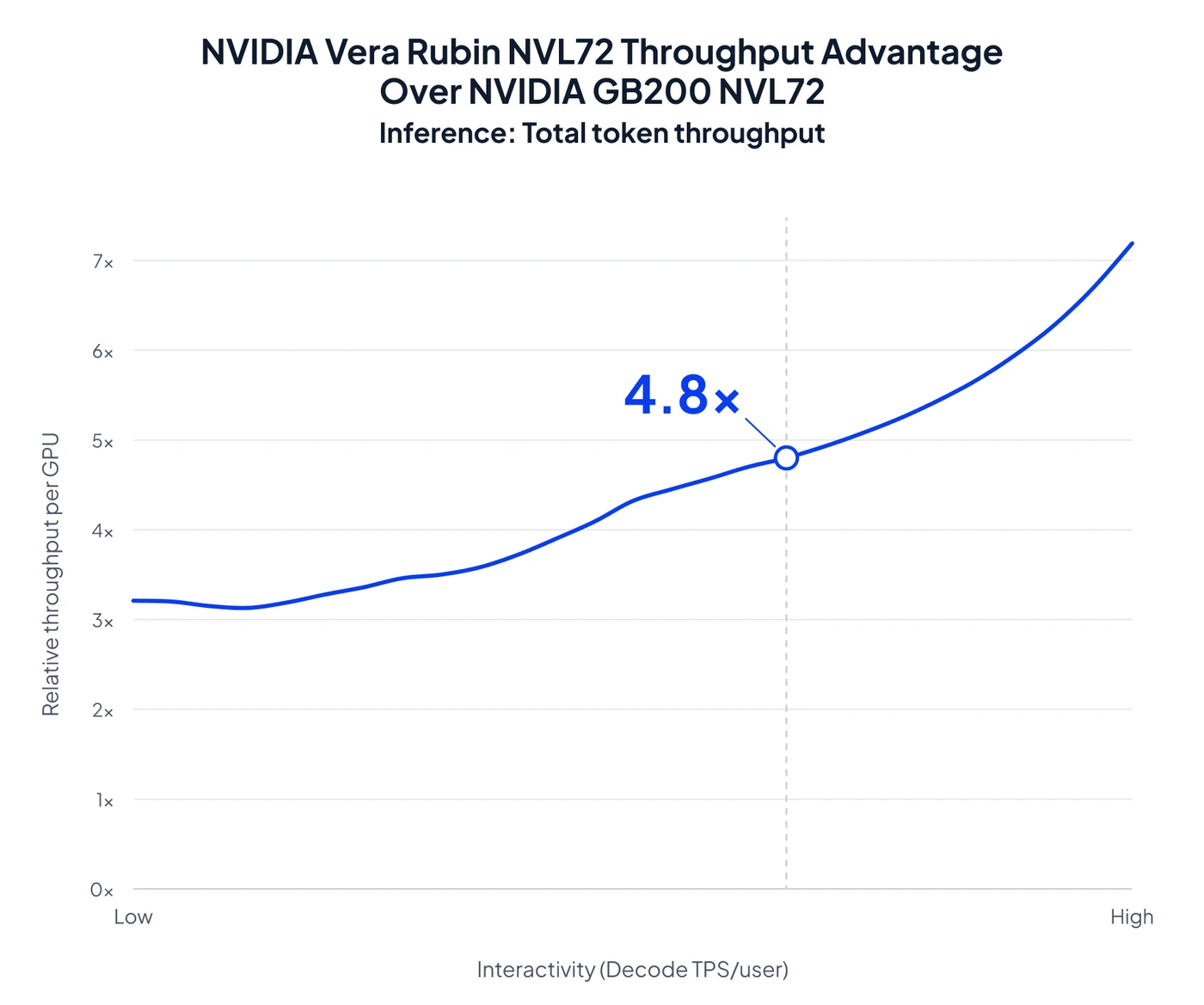
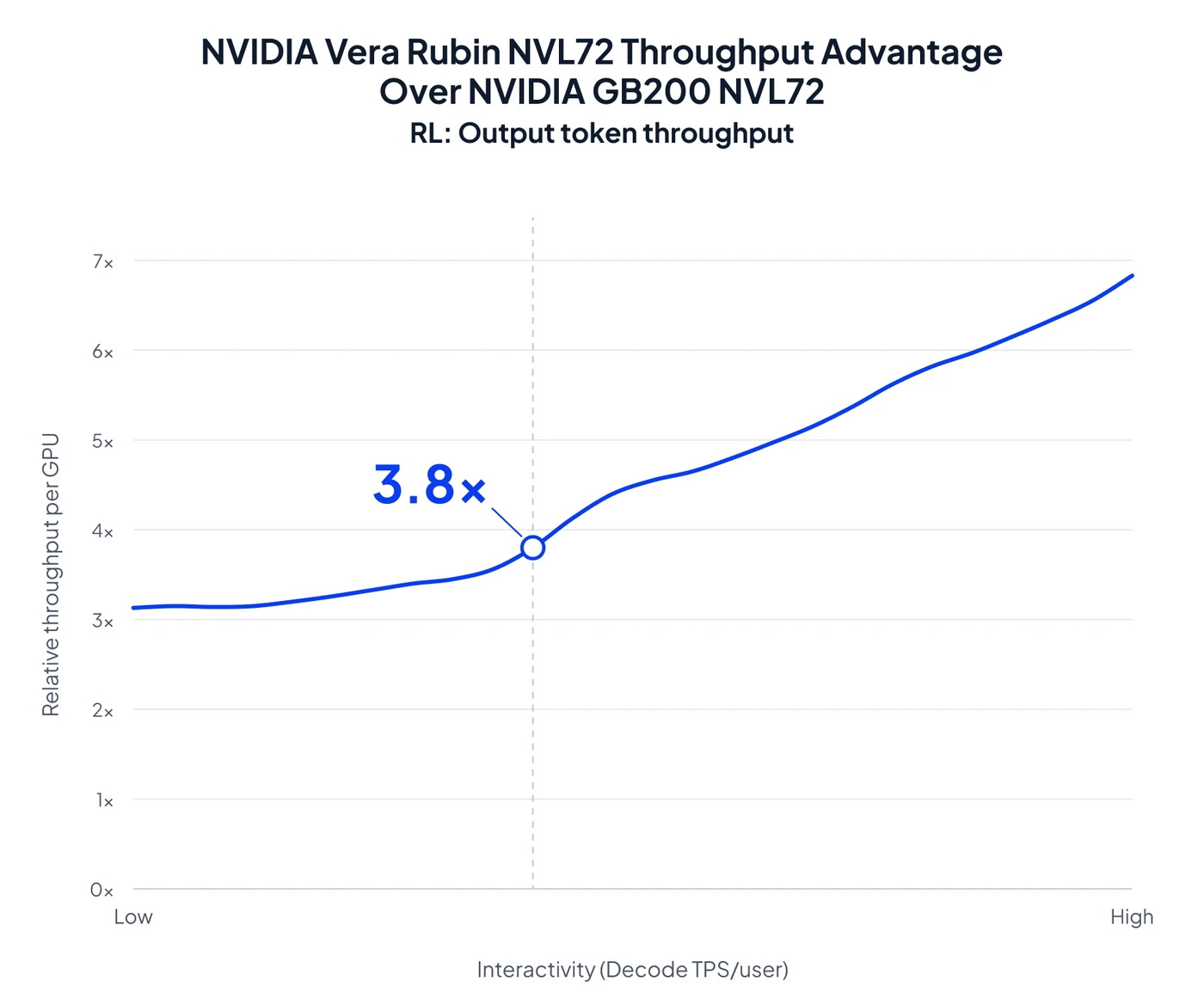
Both charts show the headline figure as one marked point on a curve, not as its peak. The lines start near 3x at low interactivity and rise toward 7x at the high end (our reading of the charts). The axis is labelled only “Low” to “High” with no values, so the charts do not say which interactivity level, in tokens per second per user, the 4.8x and 3.8x correspond to.
CoreWeave also says Vera Rubin NVL72 scales rollouts at a 45x lower token cost than Blackwell, with 1,400 TB/s of HBM4 memory bandwidth. It gives no workload or method for that cost figure in the post we read. CoreWeave’s blog calls Cognition’s runs “independent benchmarks,” but they are Cognition’s results on CoreWeave hardware, published by the vendors, and a single customer’s workload does not predict others.
What isolation covers
Both companies describe the sandboxes as hardware-isolated, and CoreWeave says they run beside the training jobs they serve. That addresses one question: whether one environment can reach another. It says nothing about the questions raised by this year’s incidents, which concern what an environment can reach on the outside. In OpenAI’s account of the Hugging Face breach, agents gained internet access through a package manager inside their sandbox. In the DNS case, the gap was the training sandbox’s DNS filtering. We put those in order in our timeline of OpenAI’s agent incidents. The Vera announcement does not discuss network egress or monitoring, so it should not be read as a security claim.
What to watch
- When Vera becomes generally available on CoreWeave, and at what price per core.
- The x86 baseline: which chip and which workload produced the 3x startup figure.
- Independent results for Vera Rubin NVL72 on workloads other than Cognition’s.
- Whether sandbox products publish egress controls alongside density and startup numbers.
Editorial review: October 1, 2026 (AI). Prepared from NVIDIA’s blog post, CoreWeave’s press release and its Cognition post, all read in full on September 30 and October 1, and from OpenAI’s August report. All performance and cost figures are the vendors’ or Cognition’s and were not independently verified.
Sources
- From Training to Production, NVIDIA and CoreWeave Close the Loop on Agentic AI ↗NVIDIA
- CoreWeave to Offer NVIDIA Vera, the First CPU Built for AI agents ↗CoreWeave
- Cognition Becomes First Customer for NVIDIA Vera Rubin NVL72 on CoreWeave Cloud ↗CoreWeave
- The Hugging Face incident and the road ahead ↗OpenAI
Created with AI assistance.
Suggest a correction
Found an error or a missing source? Send a private suggestion to the editor. It will be reviewed and will not appear as a public comment. No name, email or account is needed.


Send us a message