Sakana AI SAIL: a robot tries the movement in simulation before acting
SAIL refines robot trajectories through simulation. Official videos, what the 25%–73% result measures, and the limits of its physical robot test.
In this article
Sakana AI and the University of Tokyo use their 28 September SAIL announcement to explore a practical question: should a robot execute the first movement sequence a vision-language model proposes? Their approach searches for a better trajectory in simulation before sending it to the physical arm, without updating the underlying model’s weights.
The dates matter. The paper first appeared on 9 March and was revised on 19 September. Today’s development is Sakana’s presentation of the work, accepted to IROS 2026—not the first appearance of the research.
Try the movement in simulation first
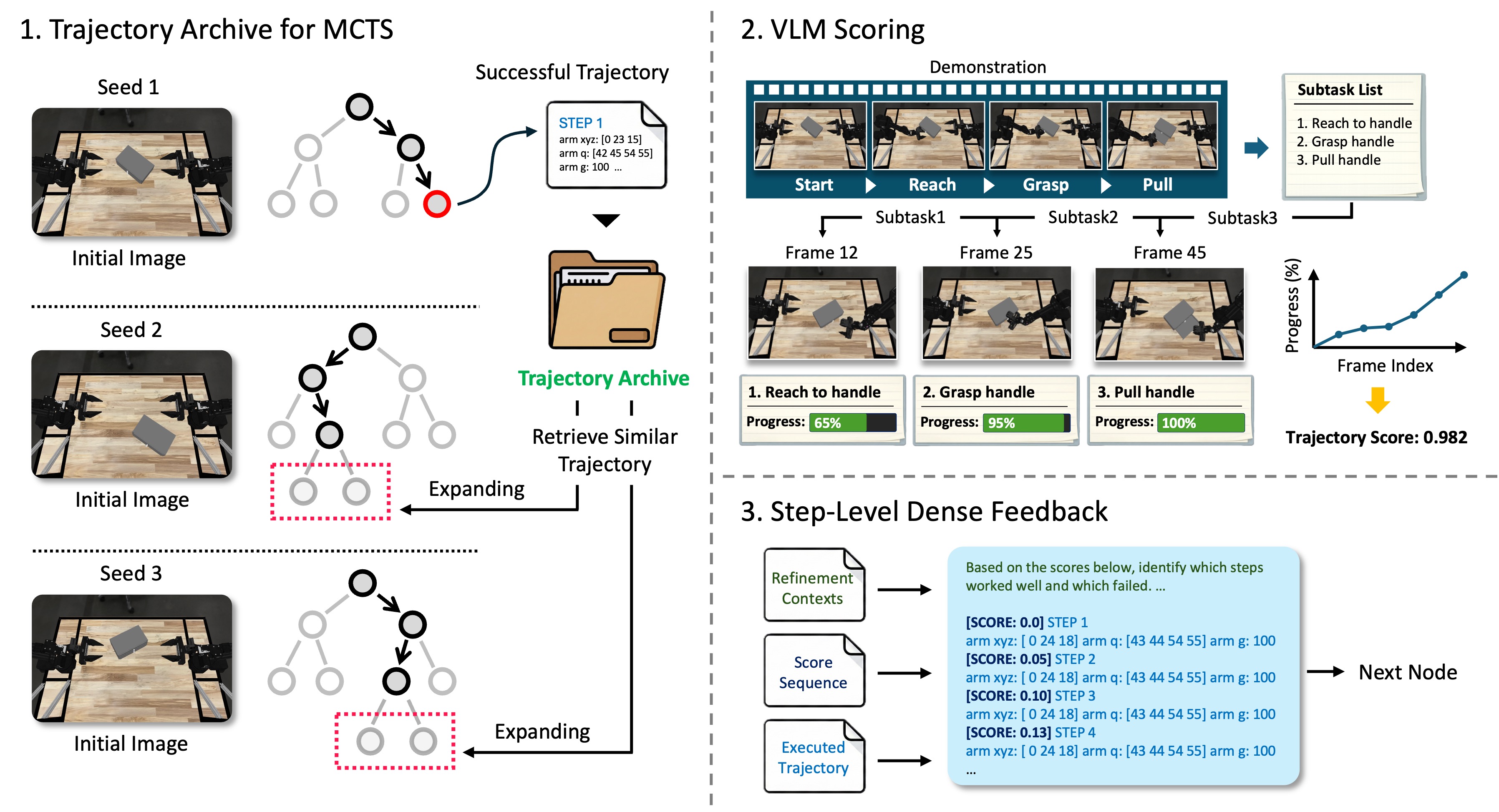
Putting a block into a bowl requires more than recognizing both objects. The approach angle, grasp position and order of movements must also work. SAIL generates a trajectory using a few successful demonstrations, runs it in a simulator and asks an evaluation model to inspect the resulting video. Feedback about stalled steps informs the next candidate.
Monte Carlo tree search explores alternatives while refining promising trajectories. The physical robot therefore need not execute the first prediction. The experiments use Gemini Robotics-ER 1.5 for both generation and evaluation. SAIL is a surrounding method, not a newly trained foundation model.
From 25% to 73%: What does success mean?
The experiments use six simulated tasks with 20 initial configurations per task. A larger search budget improves the average rate of finding a successful trajectory:
| Candidate budget | Average success |
|---|---|
| 1 | 25% |
| 6 | 55% |
| 15 | 65% |
| 30 | 71% |
| 45 | 73% |
These are the researchers’ reported simulation results, not our independent evaluation. Success means finding a trajectory that passes the simulator’s task check within the search budget. That check is separate from the model’s progress score used to guide the search. The 73% figure is not a promise about arbitrary real-world robot tasks.
What happened on a physical robot?
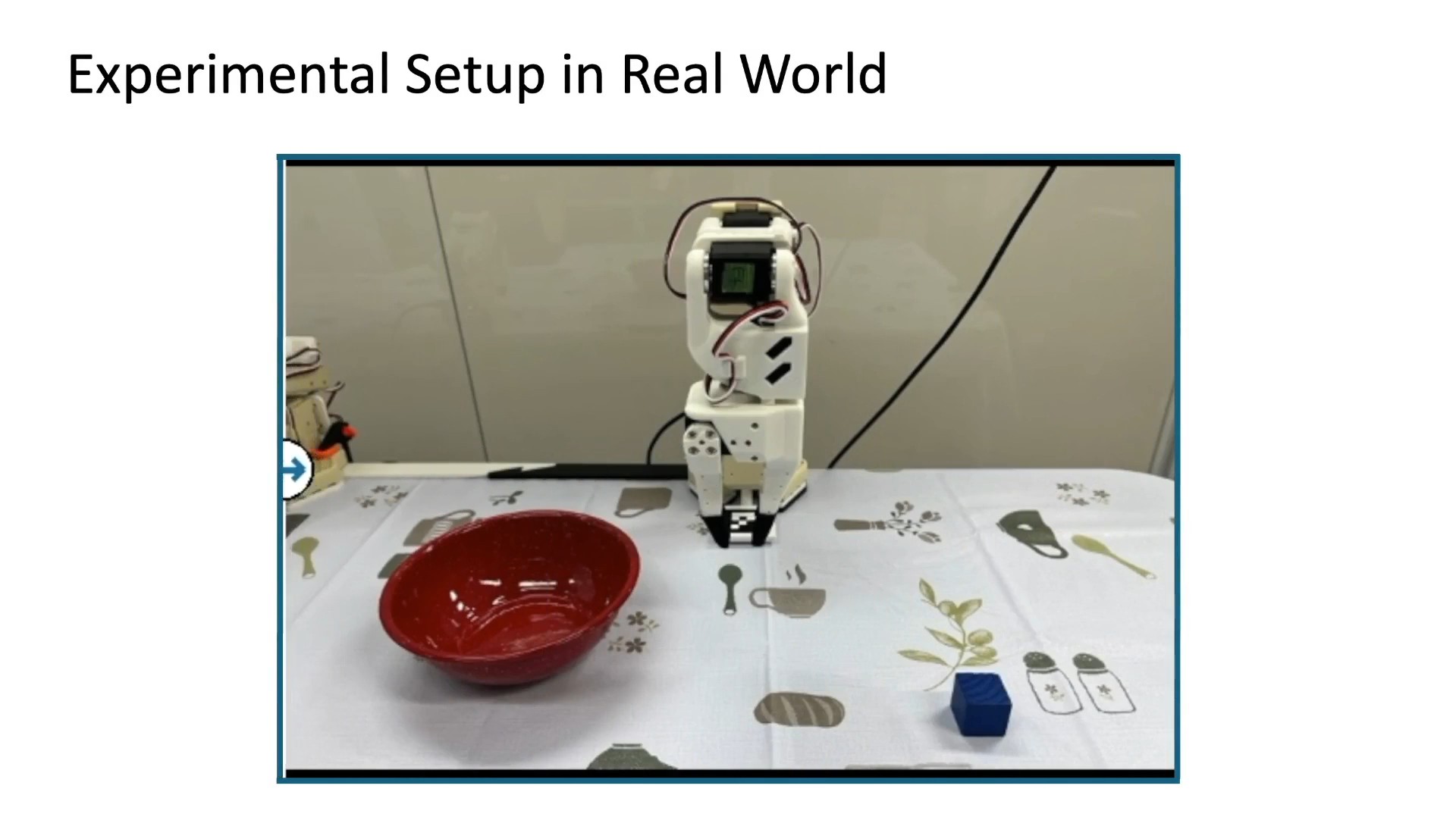
The team tested block placement with a LeRobot SO-101 arm. A scene reconstructed from color and depth observations supplied the simulation. With a 15-candidate budget and randomized object positions, five of six trials succeeded. The reported failure was associated with pose estimation and differences between simulated and physical contact.
Where might the approach be useful?
Our reading is that the useful question shifts from “how smart is the robot?” to “how thoroughly can a proposed action be tested before it becomes physical movement?” A predictable task at a fixed workbench might justify the work of setting up a simulator. A changing scene raises another issue: the world may move while the search is running. These are application-design questions, not deployments validated by this study.
The limitations are substantial. Execution is open-loop, without visual correction during movement. Search requires additional computation. Physical validation covers one task and a small number of trials. Better results from more candidates do not establish a faster or cheaper system.
SAIL is worth following because it treats progress as more than retraining a model. The simulator, feedback and search budget also influence performance. For a deployment decision, success rates should be evaluated alongside total latency, computation cost and transfer to unfamiliar scenes.
Sources
- SAIL — official announcement, 28 September ↗Sakana AI
- SAIL — demonstrations and results ↗Sakana AI / University of Tokyo
- SAIL paper and version history ↗arXiv
- SAIL full paper (CC BY 4.0) ↗Sato et al.
Created with AI assistance.
Suggest a correction
Found an error or a missing source? Send a private suggestion to the editor. It will be reviewed and will not appear as a public comment. No name, email or account is needed.


Send us a message