Claude Dashboards and Claude Motion launch in beta as Docs, Slides and Design go to every plan
Claude Dashboards and Motion enter beta; Docs, Slides and Design are out of beta on every plan, and the standalone Design site closes December 14.
In this article
Anthropic announced two new Claude features on October 8, 2026 and took three others out of beta. Claude Dashboards turns data into a dashboard that stays current, and Claude Motion turns an idea into a short animated explainer. Docs, Slides and Design are no longer in beta and are on every plan. Everything below is from Anthropic’s announcement, which we read in full. We have not tried the features, and the page does not give pricing, usage limits or the exact permissions Dashboards uses on a data platform.
What is Claude Dashboards?
You connect a data platform, ask a question in plain language, and Claude builds a dashboard from your data and keeps it current as the data changes. Anthropic lists Amazon Redshift, BigQuery, ClickHouse, Databricks and Snowflake, and says it also works with other connectors, for example a dashboard of Salesforce opportunities. It is in beta on paid plans.
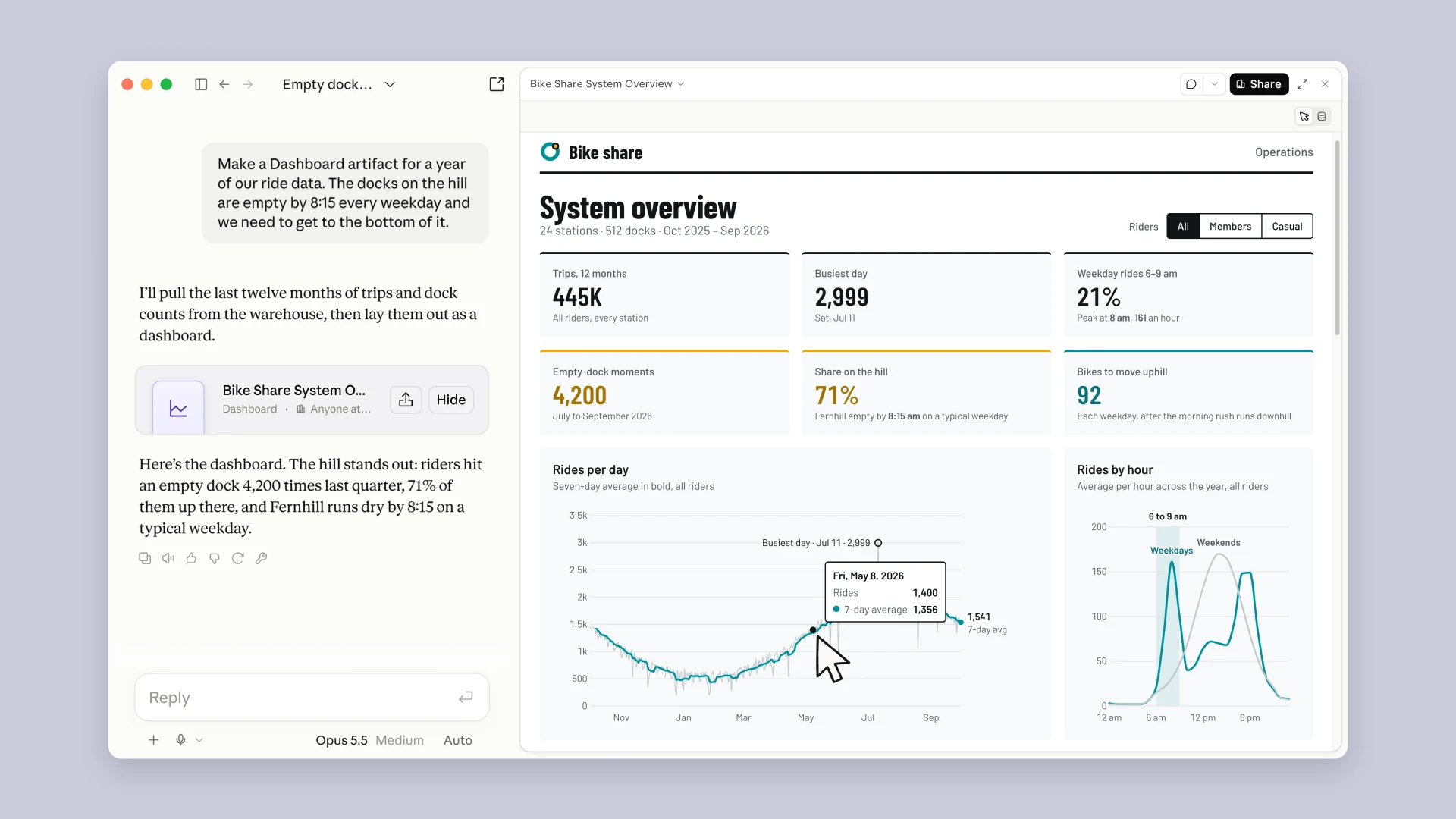
- It shows its work. Click any number to see the query behind it, or ask Claude to explain it. Each chart shows when its data was last refreshed.
- It is meant for quick questions. Anthropic’s example is how this week’s signups compare with last month’s. For deeper analysis you can send the dashboard to Amplitude, Grafana, Hex, Mixpanel, Omni, Perplexity, PostHog or Sigma and continue there. Looker, monday.com and Tableau are listed as coming soon.
- Claude makes the first version. In Anthropic’s words, you decide what gets shared.
What is Claude Motion?
Claude Motion builds an animation from a prompt that plays like a short video: a quarterly report as a 30-second all-hands explainer, motion added to a chart in a board deck, or a product walkthrough for onboarding. You can edit it directly or ask Claude to change it, then download it as an MP4. It is in beta on Team and Enterprise.
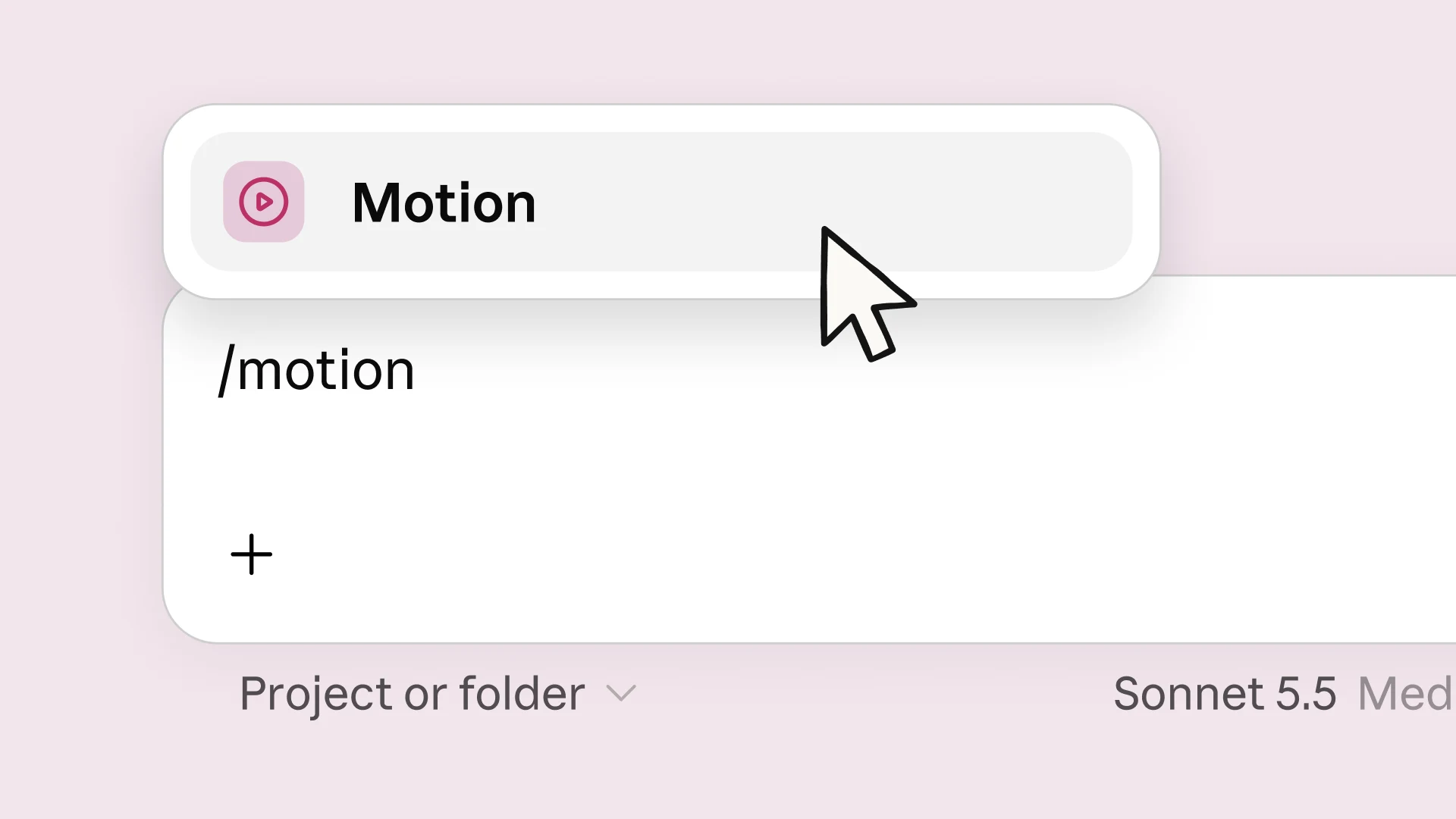
- It is code, not generated video. Claude writes code that animates your text, charts, shapes and images, so you can change any word, number or timing. Anthropic says it does not use a video-generation model, so there is no generated footage and no AI-generated people.
- Built for your own material. Anthropic describes it as made for explaining your own work.
- Hand-off to video tools. You can open the result in Adobe, Descript, HeyGen, Higgsfield, invideo, Luma AI or Runway, with Canva and Captions coming soon.
What changed for Docs, Slides and Design?
Anthropic says people have made more than 45 million docs, decks and designs in Claude since they arrived in every conversation, a figure we cannot verify, and that it is taking the beta label off. They are now on every plan, including Free. The listed changes:
- Enterprise: artifacts support CMEK (customer-managed encryption keys), and admins choose which artifact templates their organization uses.
- Co-editing: your team and Claude can work on the same doc, deck, design or dashboard.
- Sharing: slides, designs, dashboards and animations can be shared with people outside your organization, or with anyone who has the link, if your admin allows it.
- Exports: PowerPoint and PDF downloads keep the editor’s formatting, and decks can go straight to Google Slides as editable files.
- Mobile: you can edit a doc, deck or design in the Claude mobile app.
What happens to the standalone Claude Design site?
Claude Design started at claude.ai/design. Since September 16 it also works inside every Claude conversation, where it can use your context, files and connectors. Anthropic is folding the standalone site into Claude, and it stays at claude.ai/design until December 14.
- Design systems: on the Artifacts page in Claude, click “Migrate team design systems” to bring over every design system in your organization. The originals stay unchanged in the standalone version until it closes.
- Projects: they keep working in the standalone version until it closes, and need nothing from you yet.
- Chats and comments: these stay in the standalone version and will not be available after it closes. Public links to standalone projects stop working then too.
Anthropic points to a migration guide for details, which we did not read.
What do Enterprise admins need to know?
Dashboards and Motion are off by default and can be turned on in Organization settings > Artifacts. Docs, Slides and Design turn on by default on October 15, or admins can turn them on today.
What to keep in mind
These are our observations:
- Check the data access before connecting anything. The announcement says Dashboards pull from your data platform but does not describe which credentials or permissions it uses or whether access is read-only. Ask your admin and your data team before pointing it at a warehouse.
- Visible queries help, but they are Claude’s queries. Seeing the SQL behind a number is useful for review, so treat the dashboard as a draft to verify, not a source of record.
- If you use the standalone Design site, plan the move. The part that does not migrate is chats, comments and public links. Save what you need before December 14.
- This is separate from the Google Workspace integration. For Claude working inside Google’s apps, see our piece on Claude for Google Workspace.
Editorial review: October 8, 2026 (AI). Prepared from Anthropic’s announcement page (read in full the same day, including both images). We have not tried Dashboards or Motion, read the migration guide or verified the usage figure. All claims are Anthropic’s. The images are Anthropic’s, credited. “What to keep in mind” is ours.
Sources
Created with AI assistance.
Suggest a correction
Found an error or a missing source? Send a private suggestion to the editor. It will be reviewed and will not appear as a public comment. No name, email or account is needed.


Send us a message