Xiaomi launches MiMo-V2.6: Pro, Flash and a 9B model for agent builders
A closer look at Xiaomi’s new model family: multimodal agents, API prices, published benchmarks and what the smaller Qwen-based release offers.
In this article
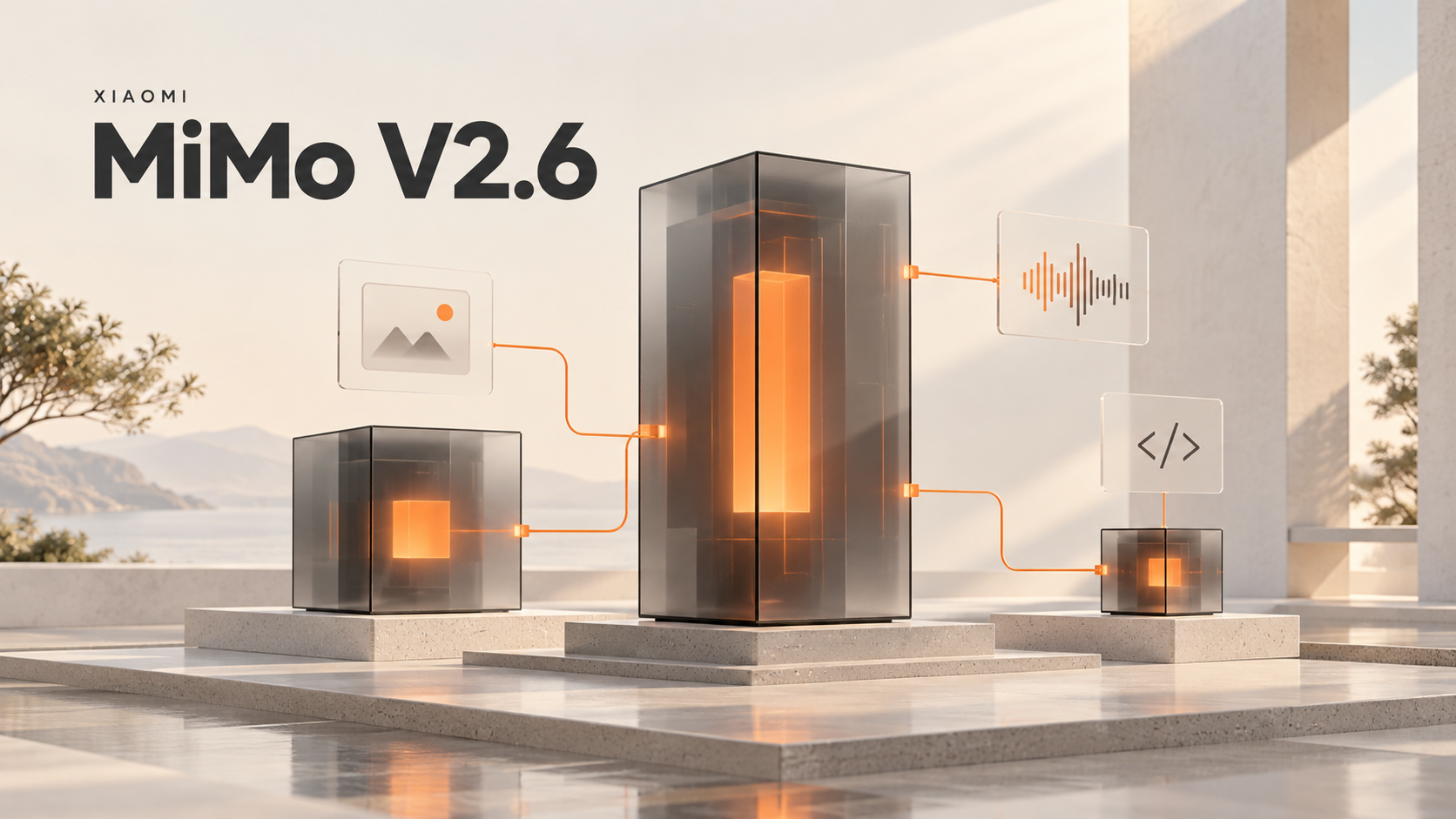
Xiaomi’s 22 September announcement introduces MiMo-V2.6-Pro and MiMo-V2.6-Flash, alongside an UltraSpeed option for Pro. For developers building agents, the release presents a practical choice: which tasks justify the flagship, and which can run on a cheaper model?
There is also a smaller release worth separating from the headline models. MiMo-V2.6-Distill-Qwen-9B opens a different route for experimentation. Understanding that distinction is more useful than treating every model carrying the MiMo name as interchangeable.
Three models, different starting points
The Pro model card describes a mixture-of-experts architecture with 1.02 trillion total parameters and 42 billion active per token. The Flash card lists 309 billion total and 15 billion active. Both support a 1M-token context and text, image, video and audio inputs.
| Model | Architecture | Where we would start evaluating it |
|---|---|---|
| MiMo-V2.6-Pro | 1.02T total / 42B active, MoE | Difficult tasks involving several tools and repeated verification |
| MiMo-V2.6-Flash | 309B total / 15B active, MoE | Frequent, repeatable agent jobs where cost matters |
| MiMo-V2.6-Distill-Qwen-9B | Qwen3.5-9B with supervised fine-tuning | Smaller-scale serving and agent research experiments |
The suggested uses in the last column are our evaluation priorities, not results from a hands-on test. Active parameter count describes how much of a MoE model participates in a token’s computation; it does not mean the remaining weights disappear from the deployment.
The 9B checkpoint was trained on MiMo-generated examples using Qwen3.5-9B as its base. It is an SFT release intended as a starting point for agentic reinforcement-learning research. Downloading it does not give you a quantized copy of Pro, or automatically transfer Pro’s context length and modality support to your runtime.
The training focus: completing work across tools
The training description combines coding, general-agent, visual and cybersecurity tasks in one reinforcement-learning run. Our interest is whether that approach helps an agent carry useful strategies between tools. A repository repair, for example, can involve reading code, running a terminal command and checking the resulting interface within the same task.
What the benchmark charts show
Xiaomi’s published comparison gives Pro 71.9 on DeepSWE v1.1, versus 67.9 for Flash. AutomationBench v1.0.6 is closer, at 53.1 and 52.3; Terminal Bench 4.0 separates them more clearly, at 34.9 and 28.8. These are the final comparison-table figures in the Pro model card, reported by Xiaomi.
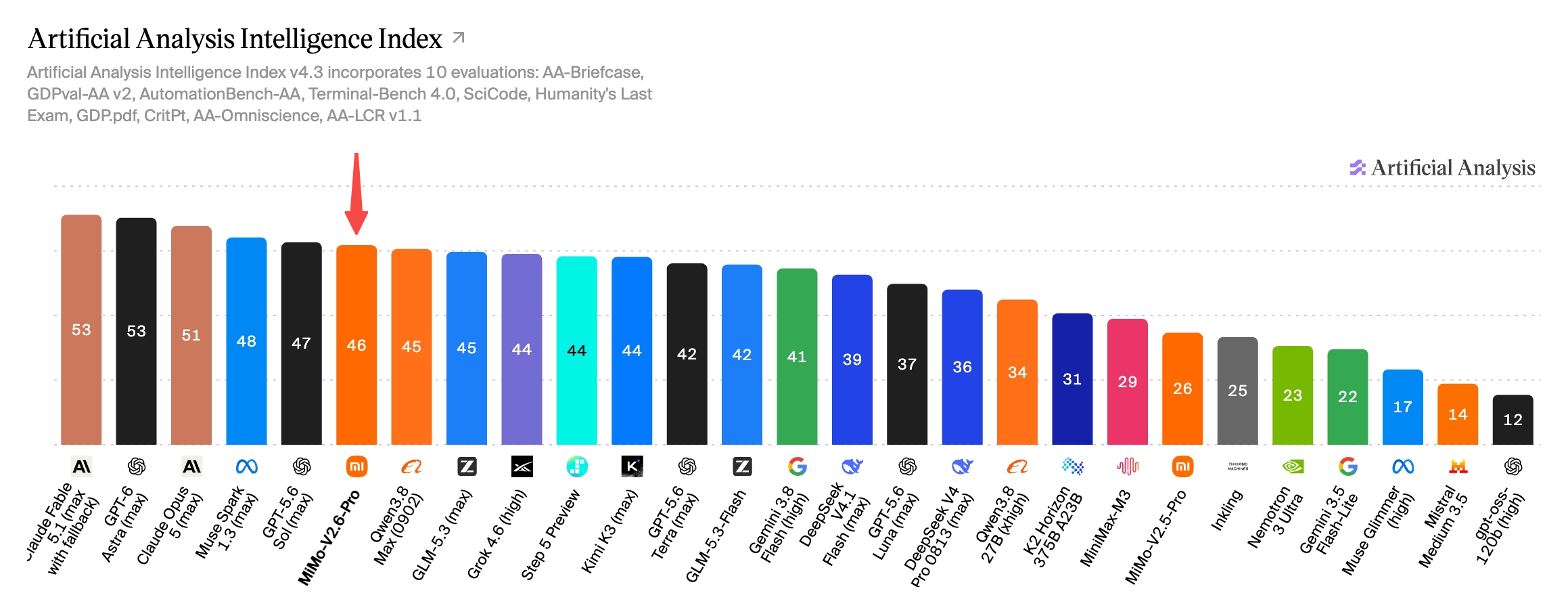
Our reading is that the choice will depend heavily on the job. A small gap in one test and a larger gap in another are good reasons to run a representative workload before choosing a default. A benchmark score cannot tell an infrastructure team how often an agent will need help interpreting its own logs, recovering from a failed command or checking a proposed fix.
The price difference deserves a real workload test
At the time of checking, OpenRouter lists these rates for Pro and Flash:
| USD per million tokens | Flash | Pro |
|---|---|---|
| Input, without a cache hit | $0.14 | $0.435 |
| Output | $0.28 | $0.87 |
As a simple illustration, 100,000 uncached input tokens plus 20,000 output tokens would cost about $0.0196 with Flash or $0.0609 with Pro at those rates. That calculation assumes the same token usage; it excludes other tools or services and is not a measured task cost.
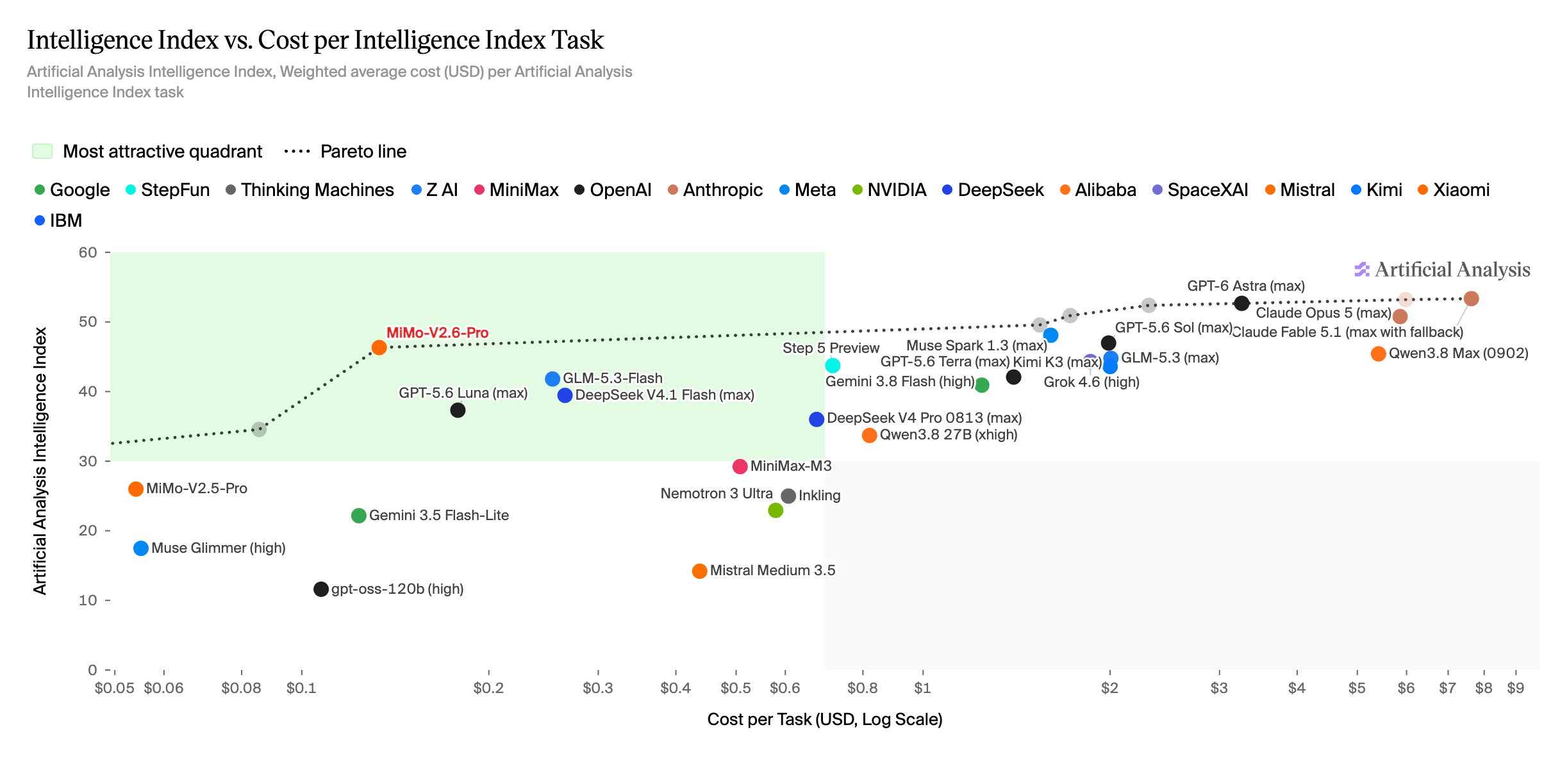
A cheaper token tariff can still produce an expensive agent if it takes many attempts. Conversely, paying for Pro on every straightforward request may buy little. We would compare cost per accepted result, recording retries, tool calls, elapsed time and human corrections alongside the bill.
A useful first experiment for an SRE team
Consider a deliberately limited task: give an agent a sanitized incident timeline, relevant configuration files and a screenshot of a monitoring dashboard. Ask it to identify the likely cause and propose a change with a rollback plan. This is an evaluation scenario, not a task we have run on MiMo.
A practical comparison would give Pro and Flash the same materials and tools, then check:
- Does the explanation point to evidence in the supplied files?
- Can another engineer reproduce the proposed check?
- Does the suggested change solve the test case without breaking the existing checks?
- How much intervention, time and token usage does the completed attempt require?
For this first exercise, the deliverable would be a reviewed patch in a sandbox. That makes success observable and gives the team a basis for deciding whether a cheaper default model with selective escalation is worth building.
How to try it
Xiaomi lists AI Studio, MiMo Code, Desktop and its API among the launch access options. For an API evaluation, OpenRouter also has live listings for both models. For self-hosted experiments, use the official model cards linked above to check the checkpoint and serving requirements first.
For a small lab, we would begin by assessing the 9B model’s runtime fit. For an existing API agent, we would start with a small Pro-versus-Flash comparison using real acceptance criteria. The interesting follow-up is whether the reported gains survive those everyday tasks with less rework.
Checked on 22 September 2026. This article combines source reporting with an explicitly proposed evaluation workflow; canberk.me has not run these models or independently reproduced their benchmarks.
Sources
- Introducing MiMo-V2.6 series — 22 September 2026 ↗Xiaomi MiMo
- MiMo-V2.6-Pro-RL — model card and evaluation results ↗Xiaomi MiMo
- MiMo-V2.6-Flash-RL — model card and architecture ↗Xiaomi MiMo
- MiMo-V2.6-Distill-Qwen-9B — training and evaluation ↗Xiaomi MiMo
- MiMo-V2.6-Pro — API pricing and supported inputs ↗OpenRouter
- MiMo-V2.6-Flash — API pricing ↗OpenRouter
Created with AI assistance.
Suggest a correction
Found an error or a missing source? Send a private suggestion to the editor. It will be reviewed and will not appear as a public comment. No name, email or account is needed.


Send us a message