Microsoft's new Copilot connects Home, Code and Autopilot for ongoing work
Microsoft announced Home, Code and Autopilot on September 25. Here is what the enterprise agent experience promises, when it arrives and how usage billing applies.
In this article
Microsoft announced Home, Code and Autopilot on September 25, 2026 as a way to connect answering questions, delegating work, building tools and assigning persistent tasks in Copilot. This September 27 article examines the announcement, the separate technical and billing documentation, and what an enterprise team would need to verify. It is not a hands-on review.
The official introduction below shows Microsoft’s proposed experience. Playback connects to YouTube only after a click.
What was announced, and when?
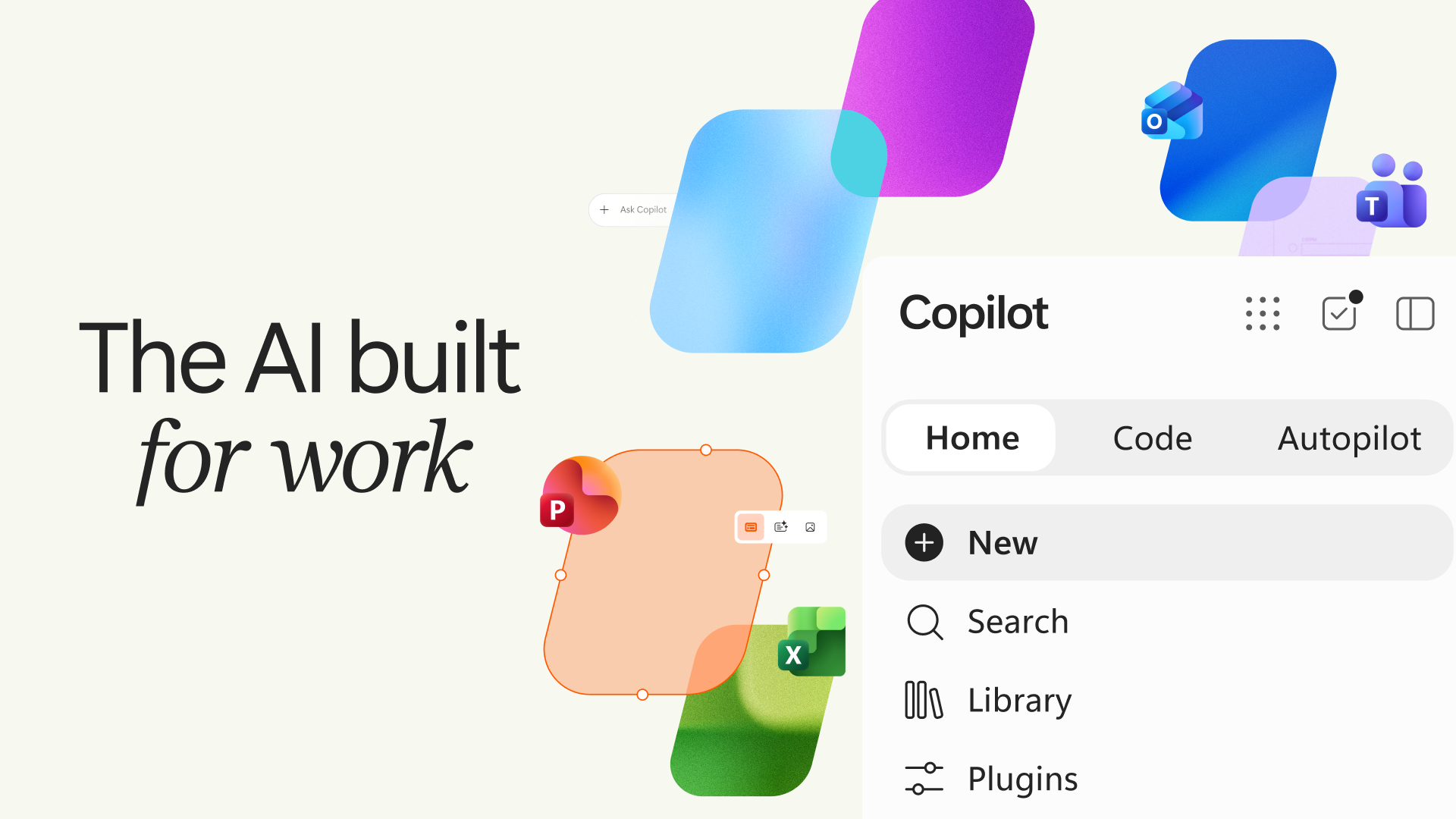
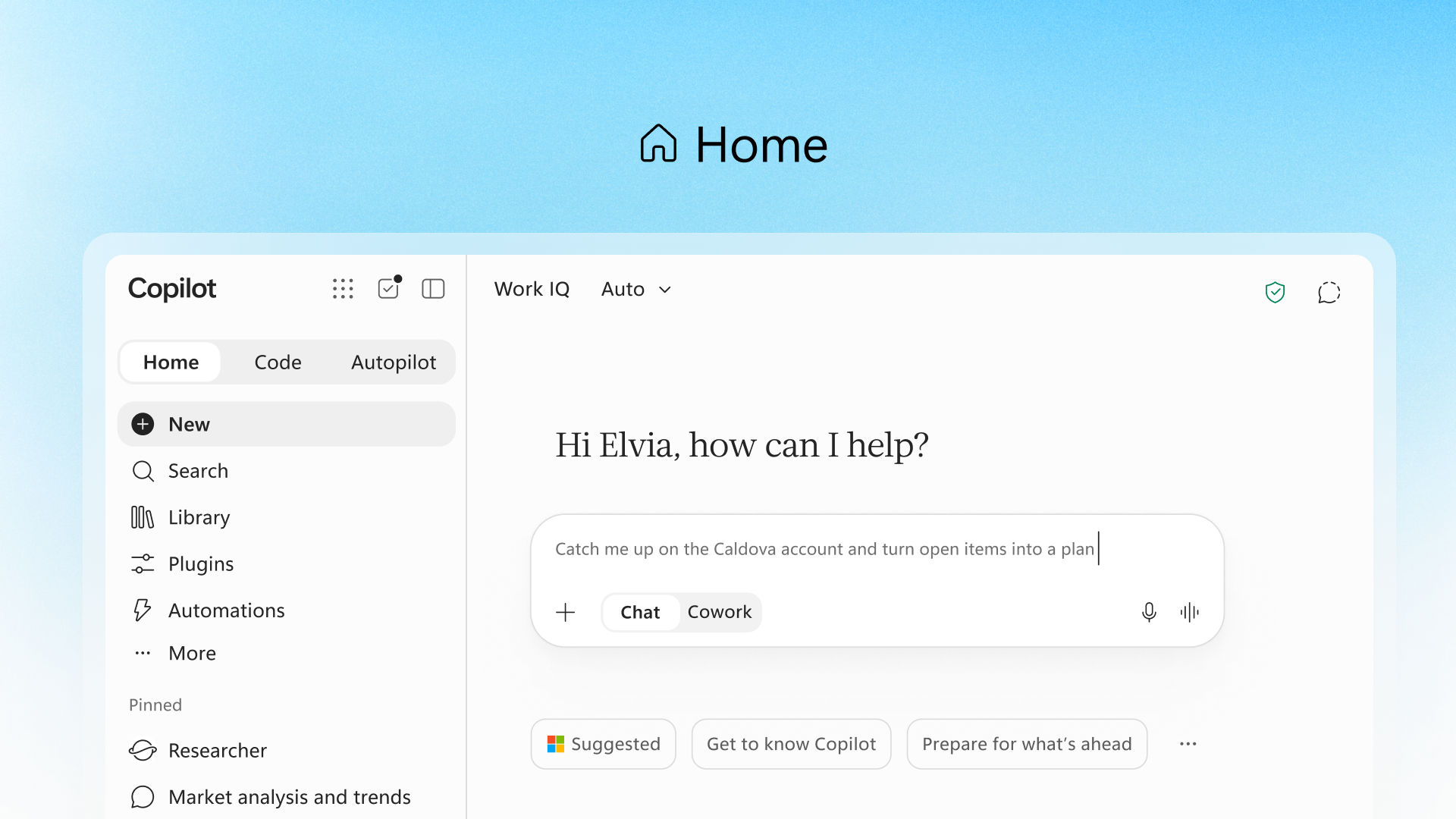
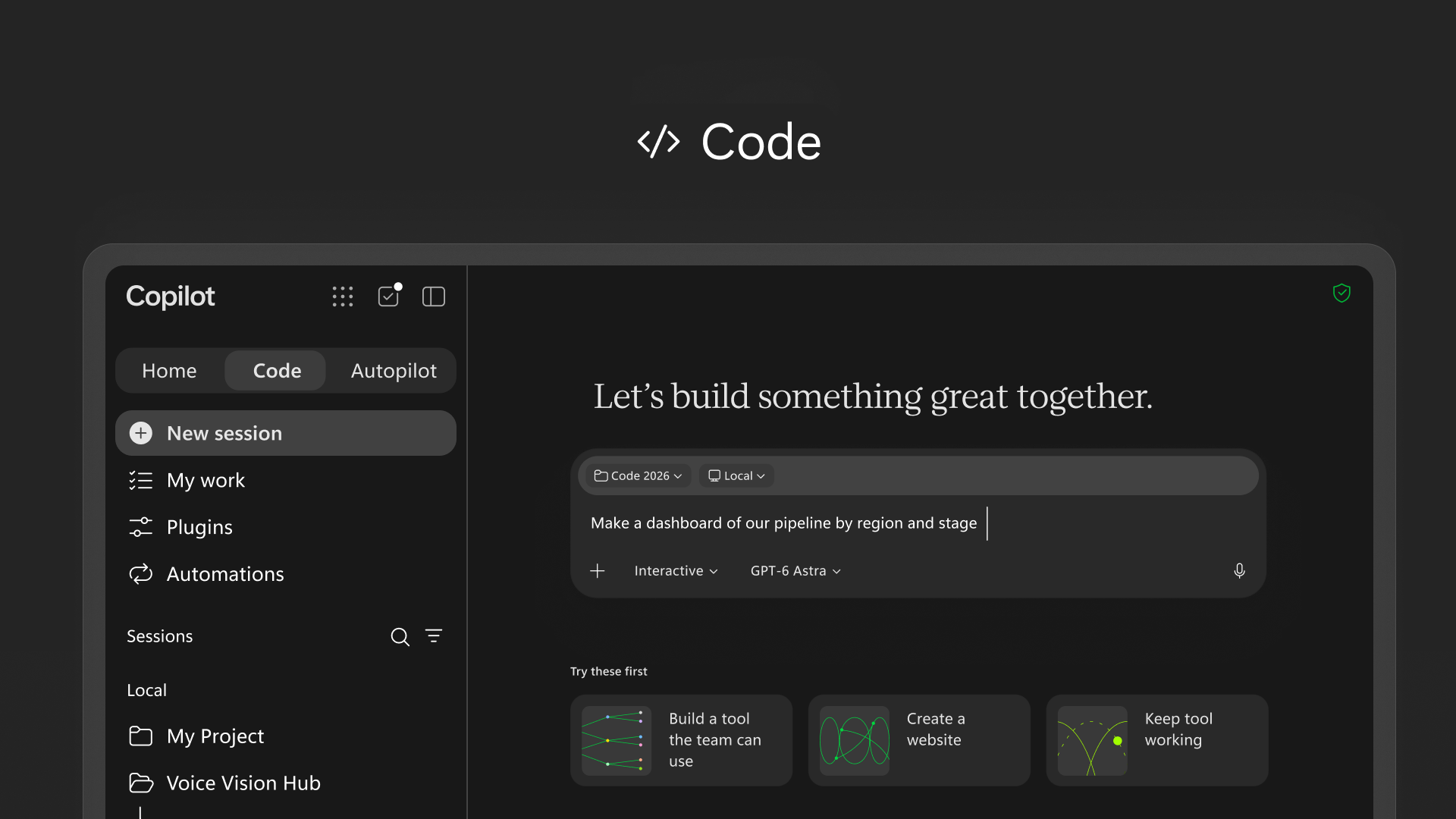
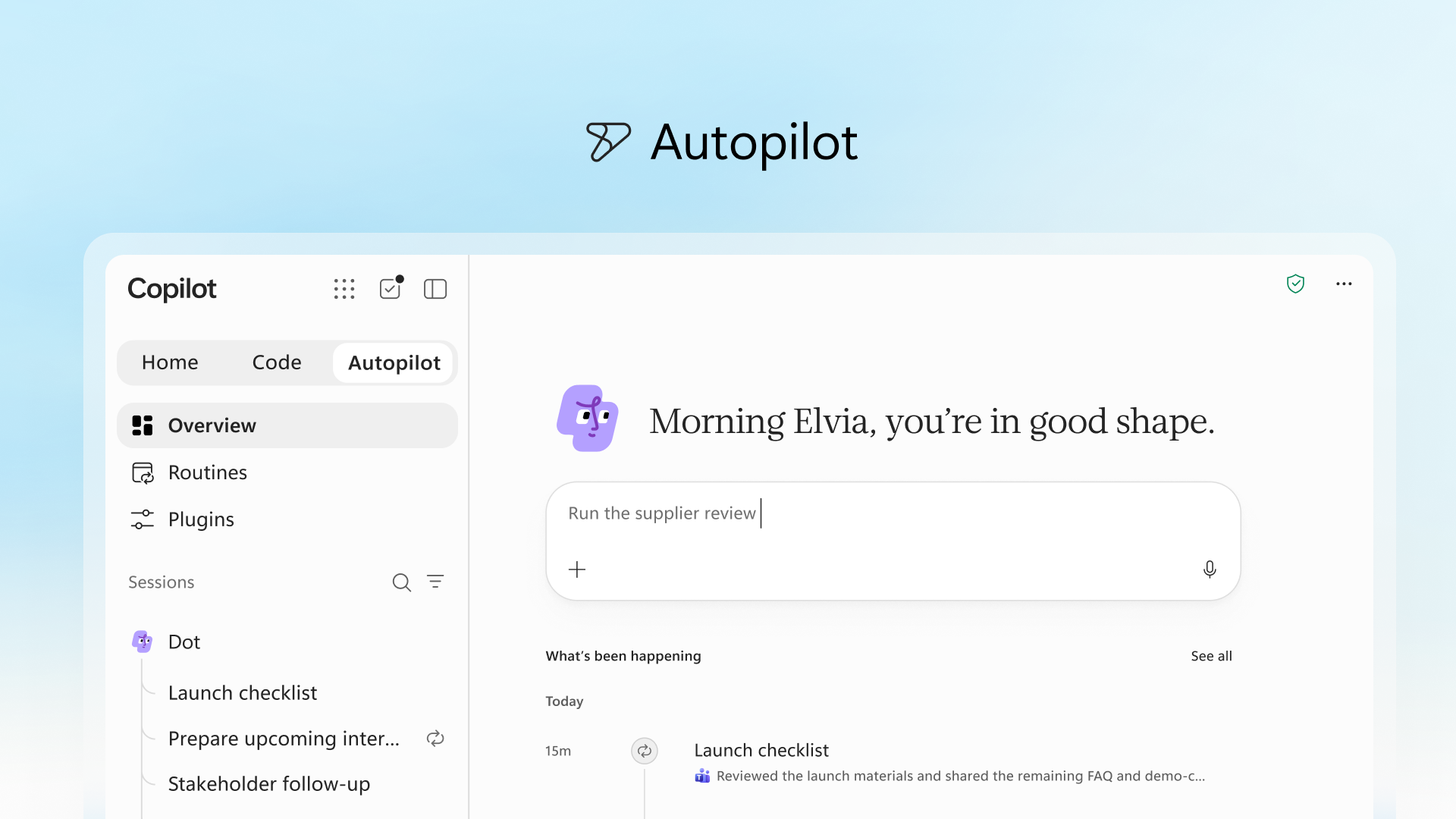
In Microsoft’s announcement, Home brings Chat, Cowork and editable Office work into one starting point. Code builds small apps, dashboards and automations from natural-language requests. Autopilot, previously Scout, is a cloud-hosted agent intended to resume and repeat work across Microsoft 365. Microsoft also announced a centrally managed plugin registry. Automatic routing among Chat, Cowork and Code is described as coming later.
| Capability | Stated September 25 availability |
|---|---|
| Home | Frontier rollout in the coming weeks |
| Code | Frontier at September’s end; wider availability in following weeks; Microsoft 365 Premium/Pro preview later in 2026 |
| Autopilot | Expanding to private preview at September’s end |
| Managed Runtime | In preview; access inside Code planned |
| Today | Private preview in Copilot in October; Outlook and Teams later |
These are distinct rollout stages, not a general release of the whole package. Microsoft’s Frontier page says feature access and usage costs vary with role and subscription.
The runtime is a governance boundary
The separate Managed Runtime product documentation says apps built through Cowork, Copilot Studio or its SDK run in a Microsoft-hosted environment with Entra authentication and tenant policies. Admins can see those apps in the Microsoft 365 admin center. This is more concrete than the announcement’s broad promise to make apps easy to create: the same app must have a discoverable owner, controlled access and an operational record after it is shared. The documentation is labeled prerelease and subject to change.
Its admin guide draws a useful distinction between making an app and running it. Each creation path has different enablement: Cowork app building depends on Frontier enrollment, the CLI path is off by default, and Copilot Studio’s preview path is on by default for eligible users unless administrators narrow it. The guide describes policy enforcement for sharing, connectors, conditional access and data loss prevention, plus a central inventory with usage and health information. A team should inspect the settings for its actual creation path; “governed by Microsoft 365” is not itself a permission decision.
Editorial analysis: This architecture could reduce the gap between a quickly generated internal tool and an app that IT can find and retire. It also changes where review belongs. Before sharing an app, someone still has to verify which source data it reads, who can discover it, what connector actions it can take and who owns maintenance. The runtime’s controls help enforce organizational rules; they do not prove that generated calculations, workflows or outputs are correct.
Access and cost are separate decisions
Microsoft’s Frontier admin instructions say enrollment is controlled at tenant level. Admins can grant it to all or selected users; assigned Copilot licenses are required for the enterprise features described there. Agent-type permissions can still block a Frontier agent after a user is enrolled. Preview availability therefore has at least three gates: Microsoft’s rollout, tenant enrollment and the relevant feature or agent permissions. A date in a launch post clears none of them automatically.
The pricing post separates the per-user subscription for everyday Chat and app assistance from usage-billed work. Cowork, Code and Autopilot are among the capabilities paid for with Copilot Credits; the user subscription is also required. For enterprise customers, Microsoft says usage-billed services remain off until an admin creates a spending policy, with no billing before that step. The policy can set budgets and limits. No single price per Autopilot task follows from these sources because work duration, models and tools vary.
The runtime guide adds a practical detail: app creation and app execution can have separate credit policies. Cowork app building uses the creator’s Cowork policy, while runtime credit coverage is configured for people who run an app. Some Power Apps Premium users have a runtime entitlement under stated conditions; that does not erase build charges or other billed services. Treating “we can create it” as proof that every colleague can run it cheaply would miss this split.
Editorial analysis: A persistent agent changes the cost question from “What did one prompt cost?” to “What can this assignment spend over its lifetime?” Budget caps, alerts and a clear stop or escalation path matter more when work can continue after the initiating conversation. Microsoft describes credit visibility and admin controls, but an organization should test how they behave under its chosen preview and policy before scaling a recurring task.
Today: a preview of the next interface
Microsoft also embeds this Today demonstration in the announcement. Treat it as a product preview: the stated Copilot private-preview date is October, not September 27.
Questions for a bounded pilot
An evaluation can start with one low-risk workflow, such as assembling a weekly project briefing from approved documents. Record the inputs, allowed actions, expected output, owner and maximum spend. Then ask:
- Access: Which users actually see Home, Code or Autopilot under the tenant’s Frontier and agent settings? What is still private preview?
- Authority: Which files, channels, connectors and plugins can the agent read or act on? Which actions require a human decision?
- Traceability: Can an administrator identify the app or agent owner, inspect its activity and revoke access when the pilot ends?
- Economics: Which credits pay for building, running and recurring agent work? What happens at the policy limit?
- Quality: Does the output survive a check against source records, and can the team correct or stop a bad run?
These are editorial evaluation questions, not capabilities verified in a live tenant. The announcement supplies the direction and the documentation supplies configuration details; neither establishes reliability, universal availability or a predictable bill for a particular organization’s workload.
Editorial review: September 27, 2026 (Codex, AI). Sources are Microsoft’s announcement, Frontier and pricing pages, and Managed Runtime product and admin documentation. No independent hands-on test was performed.
Sources
- Introducing the new Copilot with Home, Code and Autopilot ↗Microsoft
- Evolution of the Copilot pricing model ↗Microsoft Community Hub
- What is Copilot Managed Runtime (preview) ↗Microsoft Learn
- Microsoft Frontier Program ↗Microsoft
- Get started with the Microsoft Copilot Frontier Program ↗Microsoft Learn
- Copilot Managed Runtime overview and key concepts for admins (preview) ↗Microsoft Learn
Created with AI assistance.
Suggest a correction
Found an error or a missing source? Send a private suggestion to the editor. It will be reviewed and will not appear as a public comment. No name, email or account is needed.


Send us a message